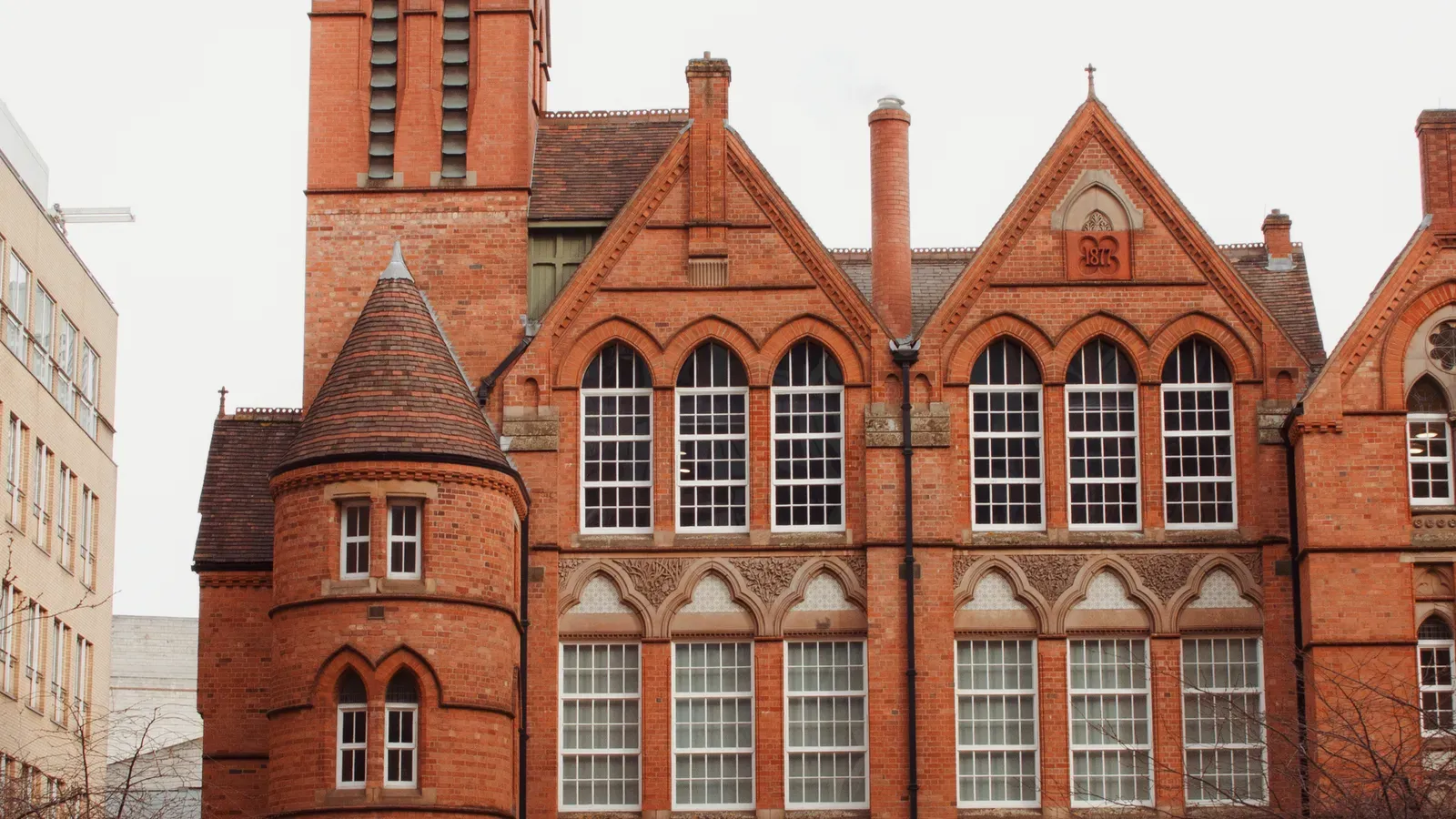
Architecture practice in Birmingham with architects on the Architects Registration Board (ARB) register.
On the ARB register · not yet claimed
Birmingham

Architecture practice in Birmingham with architects on the Architects Registration Board (ARB) register.
Architecture practice in Birmingham with architects on the Architects Registration Board (ARB) register.
Architecture practice in Birmingham with architects on the Architects Registration Board (ARB) register.
Architecture practice in Birmingham with architects on the Architects Registration Board (ARB) register.
Architecture practice in Birmingham with architects on the Architects Registration Board (ARB) register.
Architecture practice in Birmingham with architects on the Architects Registration Board (ARB) register.
Architecture practice in Birmingham with architects on the Architects Registration Board (ARB) register.
Planning decisions are made by Birmingham City Council.
Checked against the linked sources on 14 October 2026 · Birmingham City Council area, England; figures to June 2026, council pages read 14 October 2026
Birmingham had an estimated 1,176,960 residents in mid-2025 (ONS), and its planning team handles a large volume of small domestic schemes. In the four quarters to 30 June 2026 it decided 1,971 householder applications, and 86.6% were granted (MHCLG, table PS2). Put the other way, roughly 13 in every 100 were not granted, so approval is the usual outcome but not a formality.
Speed looks reasonable too. About 87% of those decisions were made inside eight weeks or within an extension of time the applicant had agreed. That second clause matters: an agreed extension counts as on time, so a slow case can still be recorded as in time. Treat the figure as a guide to the team's workload, not a promise about your own application.
| Measure | Figure | Period and source |
|---|---|---|
| Householder decisions | 1,971 | Year to 30 June 2026, MHCLG PS2 |
| Share granted | 86.6% | Year to 30 June 2026, MHCLG PS2 |
| Decided in time | 87.3% | Year to 30 June 2026, derived from PS2 counts |
| Average house price | £234,257 | July 2026, HM Land Registry / ONS |
| Homes built before 1919 | 19.4% | 31 March 2026, VOA Council Tax stock |
| Homes built 1919 to 1939 | 26.8% | 31 March 2026, VOA Council Tax stock |
| Homes built 1945 to 1972 | 22.6% | 31 March 2026, VOA Council Tax stock |
The council runs a paid pre-application service. For 2026 to 2027 its fee table lists householder advice for a single home that is not listed at £166.80 for written advice only, and £332.40 if you want a meeting. Both figures include VAT. The council's own page adds that advice does not guarantee approval, because officers may not know every issue at that stage and cannot take account of comments made after you apply (page read 14 October 2026).
Before an application is accepted it has to carry the national documents plus anything on the council's Local Information Requirements, a list whose current edition is dated December 2021. It says an application missing required information is invalid and will not be processed until the information arrives, and that the public are consulted for 21 days once the case is validated. For a household extension the extras that tend to matter are a heritage statement where the work affects a listed building or conservation area, a tree survey where roots or canopies are close, and a flood risk assessment in flood zones 2 and 3.
Search existing decisions on the council's online planning register. Reading the approved extensions on your own street is the cheapest research there is, and it shows how the case officer treated the same neighbours.
The council's conservation area page says there are 29 in the city, and names the Jewellery Quarter and Bournville Village among them. Its page on Article 4 Directions lists eleven where the council has removed some permitted development rights: Austin Village, Bournville Village, part of Edgbaston, Greenfield Road, High Street Sutton Coldfield, Moor Pool in Harborne, Moseley, Old Yardley, Selly Park, Selly Park Avenues and St Agnes. In those areas, the council says, even minor alterations such as a porch, replacement windows or re-roofing will need planning permission.
Two practical details come from the council's page on work in a conservation area. All trees in conservation areas are protected, and in places such as Bournville or the Calthorpe Estate in Edgbaston you may also need the estate manager's permission on top of the council's. That estate consent is a separate step, so ask about it early. For each of the eleven Article 4 areas the council publishes the direction itself as a download; read the one for your street, not just the headline list.
| What | Figure | Source |
|---|---|---|
| Householder decisions, Birmingham | 1,971 decisions | MHCLG, Live tables on planning application statistics: PS2, last four quarters to 30 June 20261 July 2025 to 30 June 2026, published 24 September 2026 |
| Householder applications granted | 86.6% | MHCLG, Live tables on planning application statistics: PS2, last four quarters to 30 June 20261 July 2025 to 30 June 2026, published 24 September 2026 |
| Decided within 8 weeks or an agreed extension (derived from PS2 counts) | 87.3% | MHCLG, Live tables on planning application statistics: PS2, last four quarters to 30 June 20261 July 2025 to 30 June 2026, published 24 September 2026 |
| Average house price, Birmingham | £234,257 | HM Land Registry / ONS, UK House Price Index data downloads, July 2026 (average price, not seasonally adjusted)July 2026, published 16 September 2026 |
| Council Tax homes built before 1919 / 1919 to 1939 | 19.4% / 26.8% | Valuation Office Agency, Council Tax: stock of properties 2026, Table CTSOP4.0Stock at 31 March 2026, published 24 September 2026 |
| Population, Birmingham | 1,176,960 | ONS, Estimates of the population for England and Wales, mid-2025 (2023 local authority boundaries)Mid-2025, published 29 July 2026 |
| Householder pre-application advice, written only / with a meeting | £166.80 / £332.40 (including VAT) | Birmingham City Council, Fees for pre-application advice and Planning Performance AgreementsPlanning pre-application charges 2026 to 2027; page last updated 23 June 2026 |
| Conservation areas in Birmingham | 29 | Birmingham City Council, Birmingham's conservation areasPage last updated 4 June 2026, read 14 October 2026 |
| Conservation areas with Article 4 Directions | 11 listed | Birmingham City Council, Extra protection for Conservation Areas: Article 4 DirectionsRead 14 October 2026 |
VOA figures for 31 March 2026 put 19.4% of the city's Council Tax homes before 1919 and a further 26.8% between 1919 and 1939, which together is 46.2% built before the Second World War. Another 22.6% date from 1945 to 1972. That spread explains why a single set of assumptions does not work across the city.
With an average price of £234,257 in July 2026 (HM Land Registry), the value uplift from extra space is also a local judgement. An architect or a local agent can tell you what a fourth bedroom adds on your road; this page cannot.
The Birmingham Design Guide is a supplementary planning document that the council says it adopted on 6 September 2022. Extensions are covered in the Healthy Living and Working Places City Manual, in City Notes LW-4 and LW-16 to LW-19. Several of its rules are specific enough to shape a drawing before any application is made.
Each service page for Birmingham looks at these rules for one type of project: extensions, loft conversions and planning applications. For the national position, start with our guide to finding your local planning authority.
Our national guide to extensions explains how the approval routes differ, and the planning permission blog post covers the national permitted development limits.
Yes. The council's fee table for 2026 to 2027 lists householder advice at £166.80 for written advice only and £332.40 if a meeting is requested, both including VAT. The advice is optional and does not guarantee approval. Confirm the current table on birmingham.gov.uk, as the page was last updated on 23 June 2026.
In the year to 30 June 2026 Birmingham City Council granted 86.6% of its 1,971 householder decisions, according to MHCLG table PS2. That is an area-wide figure. Your own chances depend on the design, your neighbours' windows and any conservation area or Article 4 controls on your street.
The council's page lists Austin Village, Bournville Village, part of Edgbaston, Greenfield Road, High Street Sutton Coldfield, Moor Pool in Harborne, Moseley, Old Yardley, Selly Park, Selly Park Avenues and St Agnes. It says minor alterations such as porches, windows and re-roofing need permission there. Check your exact address with the council.
It is a test in the council's Design Guide used mainly for household extensions. A line at 45 degrees is drawn from the nearest habitable room window of a neighbouring home, and an extension should not cross it. The council says terraced rear wings can be judged case by case, so ask before you finalise drawings.
No law requires one for a home extension, but drawings are needed for planning, a lawful development certificate or building regulations. An architect can also test a scheme against the council's design rules before you apply. Whoever you use, check any architect on the ARB register before signing terms.
Rules and fees change, so check the linked page before you rely on a figure. Most planning and building rules here are for England; Wales, Scotland and Northern Ireland differ. This page is general information, not professional advice. Hero photo: Photographer: Daniel Wells. Photo page on Pexels (Pexels License (free to use), as shown on the photo page on 14 October 2026. Page title: Historic Red Brick Building in Birmingham.).