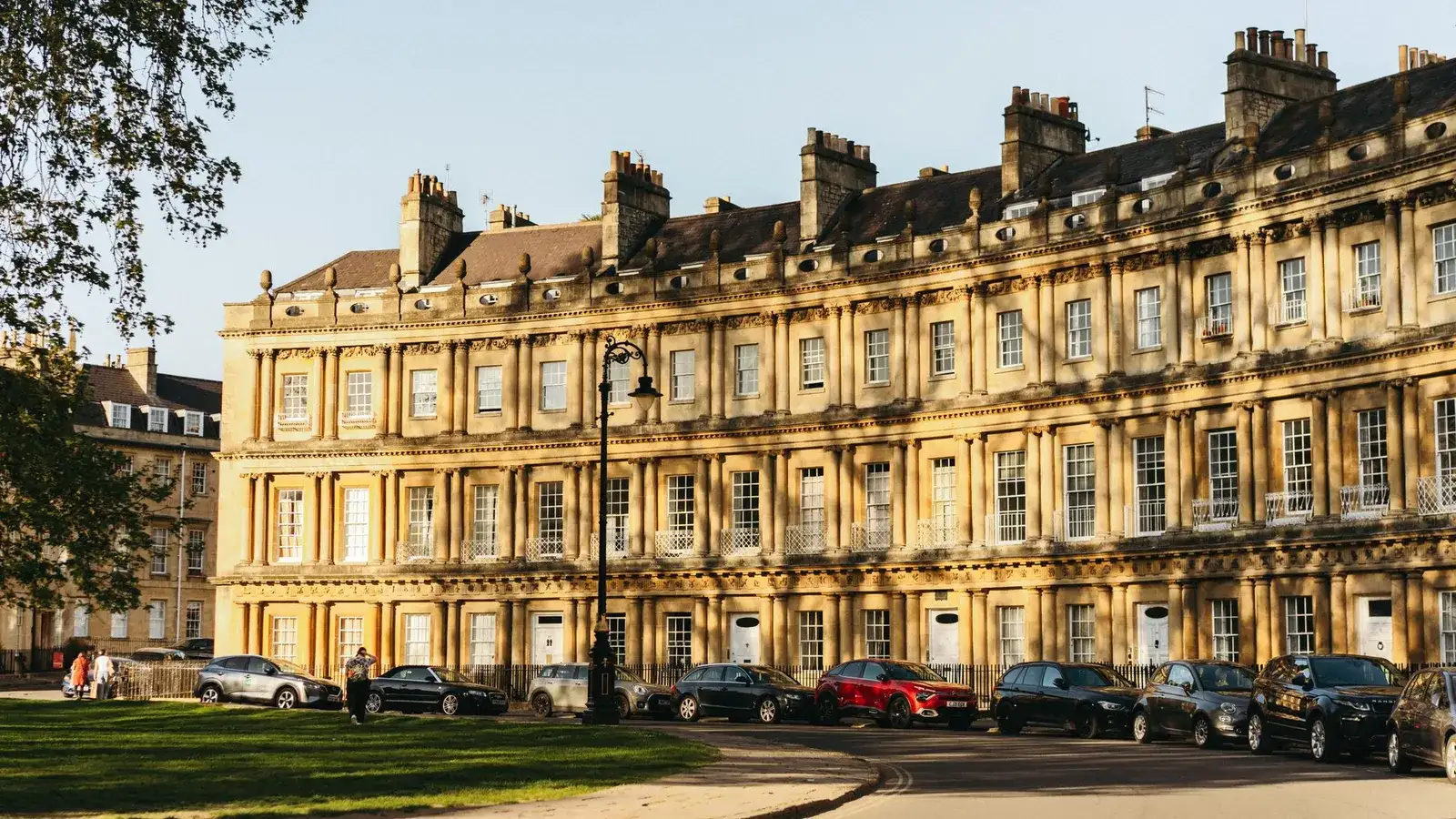

Architecture practice in Bath with architects on the Architects Registration Board (ARB) register.
On the ARB register · not yet claimed
Bath

Architecture practice in Bath with architects on the Architects Registration Board (ARB) register.

Architecture practice in Bath with architects on the Architects Registration Board (ARB) register.

Architecture practice in Bath with architects on the Architects Registration Board (ARB) register.
Architecture practice in Bath with architects on the Architects Registration Board (ARB) register.

Architecture practice in Bath with architects on the Architects Registration Board (ARB) register.

Architecture practice in Bath with architects on the Architects Registration Board (ARB) register.
Architecture practice in Bath with architects on the Architects Registration Board (ARB) register.

Architecture practice in Bath with architects on the Architects Registration Board (ARB) register.

Architecture practice in Bath with architects on the Architects Registration Board (ARB) register.

Architecture practice in Bath with architects on the Architects Registration Board (ARB) register.
Planning decisions are made by Bath and North East Somerset Council. The figures below cover the whole Bath and North East Somerset council area, not the city of Bath alone.
Checked against the linked sources on 14 October 2026 · Bath and North East Somerset Council area, England; figures to June 2026, council pages read 14 October 2026
Every council figure here describes Bath and North East Somerset as a whole, a district of 200,898 people (ONS, mid-2025) that takes in Keynsham, Midsomer Norton, Radstock and rural villages as well as the city. None of it isolates Bath itself. MHCLG's district tables record 771 householder decisions in the four quarters to 30 June 2026, with 97.1% granted (MHCLG planning statistics). Householder means work to an existing home: extensions, lofts, outbuildings and the like.
Read the rate as a district average. It blends a Georgian terrace in a conservation area with a 1970s semi at the edge of the district, and it excludes listed building consent, which is a separate application with its own outcomes. Our own calculation from the same counts puts decisions made within eight weeks or an agreed extension at 88.1%.
| Measure | Figure | Period |
|---|---|---|
| Householder decisions | 771 | Year to 30 June 2026 |
| Granted | 97.1% | Year to 30 June 2026 |
| Decided in 8 weeks or agreed time (our calculation) | 88.1% | Year to 30 June 2026 |
| Average house price | £409,045 | July 2026 |
| Council Tax homes built before 1919 | 28.9% | 31 March 2026 |
| Population | 200,898 | Mid-2025 |
The permitted development order treats a World Heritage Site in the same way as a conservation area. Schedule 1 of the 2015 Order lists both as "article 2(3) land" (legislation.gov.uk), and the Planning Portal spells out what follows for house extensions on that land (Planning Portal):
The loft route is closed too: the Planning Portal says a roof enlargement under Class B is not available on article 2(3) land. The council's mapping shows where the World Heritage Site and the conservation areas fall, so check the address before you assume any permitted development right. Our pages on extensions in Bath and loft conversions in Bath take each in turn.
The Valuation Office Agency records 28.9% of Council Tax homes in the district as pre-1919, 9.1% as 1919 to 1939, 27.5% as 1945 to 1972, 16.0% as 1973 to 1999 and 17.6% as 2000 onwards, with 0.9% unrecorded (VOA, 31 March 2026). Almost as many homes date from the postwar decades as from before the First World War, so a single set of assumptions does not fit the district.
The council's city-wide character appraisal, adopted on 31 August 2005, describes the older core in terms an architect can design against (character appraisal). Its key points include:
| What | Figure | Source |
|---|---|---|
| Householder decisions, Bath and North East Somerset, and share granted | 771 decisions, 97.1% granted | MHCLG, Live tables on planning application statistics: PS2, last four quarters to 30 June 20261 July 2025 to 30 June 2026 (four quarters); published 24 September 2026; whole district |
| Decided within 8 weeks or an agreed extension | 88.1% of householder decisions | MHCLG, Live tables on planning application statistics: PS2, last four quarters to 30 June 20261 July 2025 to 30 June 2026; our own calculation from PS2 counts, not a headline MHCLG measure |
| Average house price, Bath and North East Somerset | £409,045 | HM Land Registry / ONS, UK House Price Index data downloads July 2026, average price (not seasonally adjusted)July 2026; published 16 September 2026 |
| Council Tax homes built before 1919 | 28.9% of the stock | Valuation Office Agency, Council Tax: stock of properties 2026, Table CTSOP4.031 March 2026; published 24 September 2026; whole district |
| Population | 200,898 people | ONS, Estimates of the population for England and Wales, Table MYE2Mid-2025 (2023 local authority boundaries); released 29 July 2026 |
| Conservation areas in the district | 35 | Bath and North East Somerset Council, Find conservation areas on a mapCouncil page read 14 October 2026 |
| Listed buildings compared with the national average | More than twice the national average, in the council's words | Bath and North East Somerset Council, Heritage, environment and designCouncil page read 14 October 2026 |
| Pre-application advice, extension or loft conversion to your own home | £163, plus £76 for a meeting; 20 working days | Bath and North East Somerset Council, Pre-application advice and Development Team (service level 1)Fees from 1 April 2026, page read 14 October 2026 |
| Building control charge, loft conversion up to 40m2 | £550 plus VAT (£660 in total) | B&NES Building Control, Building Control fees and charges (Table B)Fees table read 14 October 2026 |
| World Heritage Sites and permitted development | A World Heritage Site is listed as article 2(3) land | legislation.gov.uk, Town and Country Planning (General Permitted Development) (England) Order 2015, Schedule 1 Part 1Revised text as shown 14 October 2026 |

Postwar suburbs are described differently, with reconstituted stone and concrete or clay tiles in places. If your house is one of those, the questions shift from stone coursing towards neighbour impact, trees and levels.
The council says the district has 35 conservation areas (council map page) and describes the number of listed buildings as more than twice the national average (heritage page). Historic England says about 91.7% of listed buildings nationally are Grade II, the grade a homeowner is most likely to meet (Historic England). The 2005 appraisal counted roughly 5,000 listed buildings in the city and a Bath conservation area of 1,486 hectares; both are 2005 figures and may have changed since.
The council's conservation page says conservation areas carry stricter controls over demolition and alteration of unlisted buildings and over works to trees. It adds that trees with a trunk diameter of 75mm or more, measured at 1.5 metres, are protected and that you must notify the council six weeks before work (conservation areas and planning restrictions). Listed homes get their own guide: listed buildings in Bath.
Applications are lodged through the Planning Portal and tracked on the council's planning register. Its local requirements pages list the extra documents each application type may need. The council states that it strongly recommends using a planning agent, which in practice often means an architect.
From 1 April 2026 the council's pre-application service charges by level (pre-application advice). Level 1, which covers loft conversions, conservatories and extensions to your own home, costs £163, with a further £76 if you want a meeting with the officer. The council gives a processing time of 20 working days for that level, and says the fee includes a site visit and a written report.
For a listed building the levels climb with the scale of the work: £445 at level 2 for a minor extension, £907 at level 3 for an extension or multiple alterations, and £1,594 at level 4 for major extensions. A separate £76 level 0 visit from a conservation officer is for energy improvements to listed homes. The council notes that pre-application advice does not guarantee permission and is not published on the planning register.
Anyone who calls themselves an architect must be on the Architects Registration Board register, which you can search on the ARB public information pages. In Bath, ask each practice for two things beyond that: a comparable job in the same designation, and a plain description of who will talk to the conservation officer. If your home is near the district boundary, our guide to finding your local planning authority will settle which council applies.
Bath and North East Somerset Council granted 97.1% of the 771 householder applications it decided between July 2025 and June 2026, using MHCLG counts. The figure covers the whole district and every kind of house work, so it cannot predict one scheme. Heritage designations and neighbour impact still shape each decision.
It can. The permitted development order lists a World Heritage Site as article 2(3) land, which the Planning Portal says removes the right to build side extensions or rear extensions of more than one storey without permission. Check the council's constraints map to see whether your address falls inside the boundary.
The council says there are 35 in the district, and its heritage page says Bath itself has conservation area status. Stricter controls apply to demolition, alterations to unlisted buildings and trees with a trunk of 75mm or more. You can find your address on the council's interactive map.
From 1 April 2026, level 1 advice on a loft conversion or home extension costs £163, plus £76 if you want a meeting. The council gives 20 working days for processing. Listed building work is charged at higher levels, from £445 for a minor extension to £1,594 for major extensions.
No rule requires one, but the council says it strongly recommends using a planning agent, and the heritage layers make Bath applications more document-heavy than most. An architect on the ARB register can prepare the drawings, the heritage statement where needed and the application itself.
Rules and fees change, so check the linked page before you rely on a figure. Most planning and building rules here are for England; Wales, Scotland and Northern Ireland differ. This page is general information, not professional advice. Hero photo: Photographer: Amine Kübranur Çakıroğlu. Photo page on Pexels (Pexels licence (free to use), as shown on the photo page on 14 October 2026. Location given as Bath, United Kingdom.).