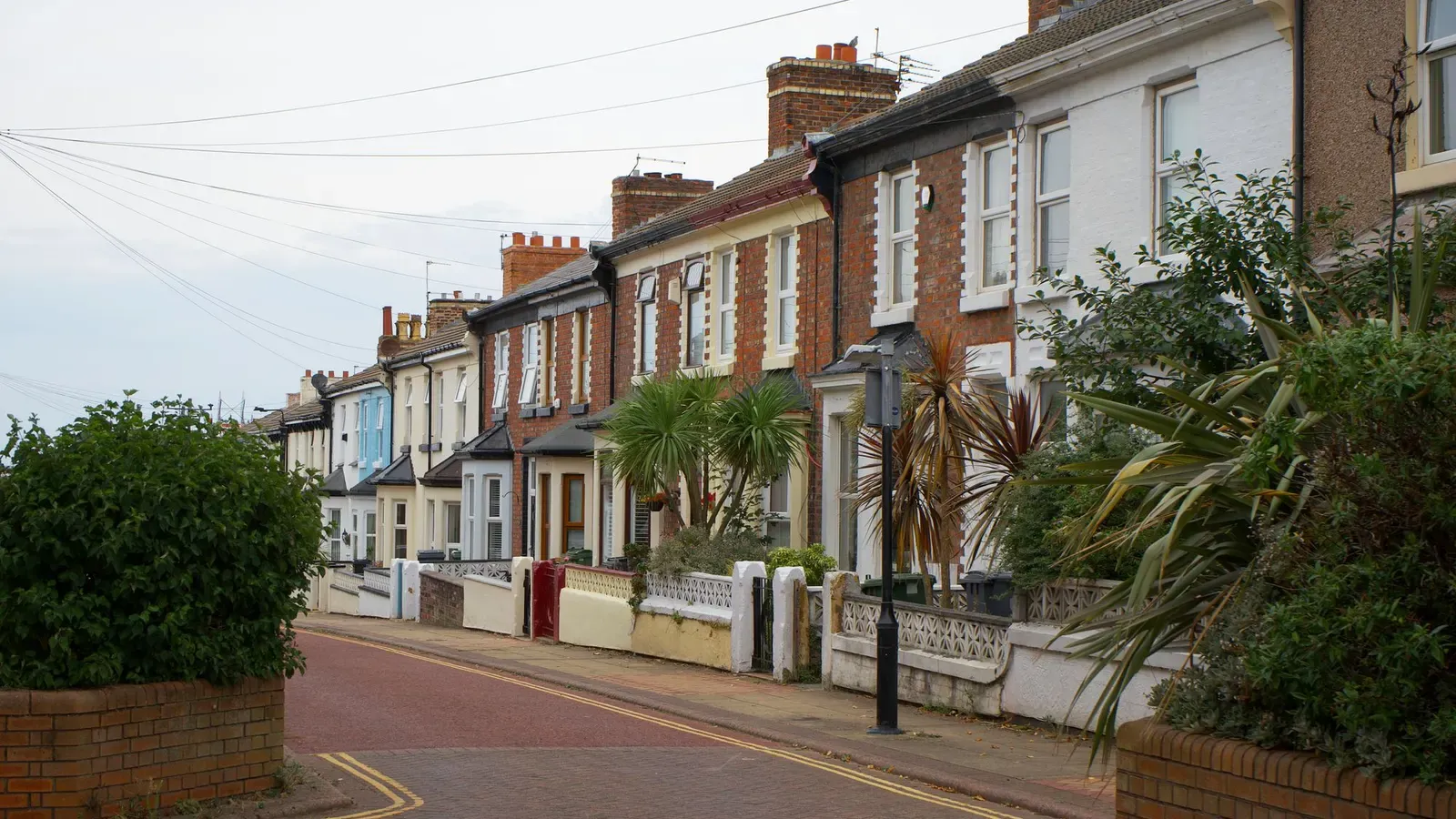
Architecture practice in Liverpool with architects on the Architects Registration Board (ARB) register.
On the ARB register · not yet claimed
Liverpool

Architecture practice in Liverpool with architects on the Architects Registration Board (ARB) register.
Architecture practice in Liverpool with architects on the Architects Registration Board (ARB) register.
Architecture practice in Liverpool with architects on the Architects Registration Board (ARB) register.
Architecture practice in Liverpool with architects on the Architects Registration Board (ARB) register.
Architecture practice in Liverpool with architects on the Architects Registration Board (ARB) register.
Architecture practice in Liverpool with architects on the Architects Registration Board (ARB) register.
Architecture practice in Liverpool with architects on the Architects Registration Board (ARB) register.
Architecture practice in Liverpool with architects on the Architects Registration Board (ARB) register.
Architecture practice in Liverpool with architects on the Architects Registration Board (ARB) register.
Architecture practice in Liverpool with architects on the Architects Registration Board (ARB) register.
Planning decisions are made by Liverpool City Council.
Checked against the linked sources on 14 October 2026 · Liverpool City Council area, England; figures to June 2026, council pages read 14 October 2026
In the four quarters to 30 June 2026 the council decided 629 householder applications and granted 90.8% (MHCLG planning statistics). Householder means work to an existing house, such as an extension, a loft, a porch or an outbuilding. Our own sum from the published counts has 96.2% of those decisions made inside eight weeks or an agreed extension, so most applicants got an answer on time.
A high approval rate describes the whole caseload. Applications can be amended before they are decided, and the figure cannot tell you whether a scheme on your street would succeed. The council publishes its applications on the LAR planning register, where you can read officers' reports on comparable houses nearby.
| Measure | Figure | Period |
|---|---|---|
| Householder decisions | 629 | Year to 30 June 2026 |
| Granted | 90.8% | Year to 30 June 2026 |
| Decided in 8 weeks or agreed time (our calculation) | 96.2% | Year to 30 June 2026 |
| Average house price | £189,036 | July 2026 |
| Council Tax homes built before 1919 | 30.9% | 31 March 2026 |
| Population | 507,915 | Mid-2025 |
The Valuation Office Agency records 30.9% of Council Tax homes in Liverpool as built before 1919 and 20.7% between 1919 and 1939. The 1945 to 1972 band is comparatively small at 12.0%, followed by 16.7% from 1973 to 1999 and 19.5% since 2000 (VOA, 31 March 2026). Flats count as homes in these bands, so they describe the mixed city and not houses alone.
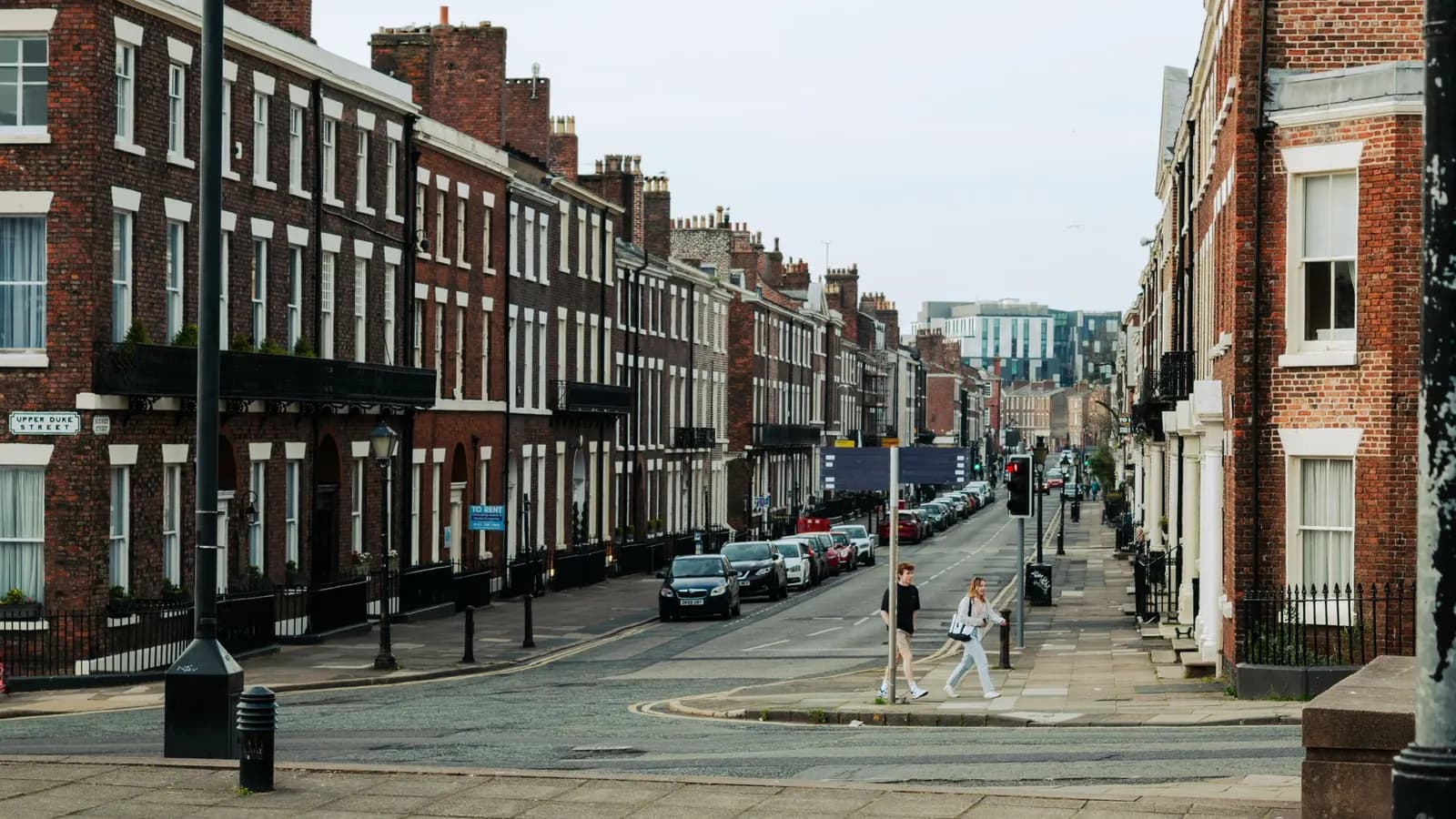
The council says Liverpool has 36 conservation areas covering 9% of the city and protecting 19,000 properties. They include Rodney Street, Canning Street, Sefton Park, Lark Lane, Princes Road, Wavertree Garden Suburb, West Derby and Woolton Village, along with Albert Dock and Stanley Dock. There is an online map for checking a single address (Liverpool conservation areas).
The council also says Article 4 directions cover most of the city's conservation areas. Where one applies, works that change the outside of a building or its grounds may need permission even when permitted development would normally allow them. The page lists roof coverings, chimneys, dormers and rooflights, windows and doors, external cladding, gates, hard-standing and sometimes boundary walls. In Kensington Fields, Knotty Ash, Toxteth Park and the Avenues the direction applies only to elevations facing a highway; elsewhere it covers every elevation (Article 4 directions). Our page on listed buildings covers the separate consent regime.
| What | Figure | Source |
|---|---|---|
| Householder decisions, Liverpool | 629 householder decisions | MHCLG, Live tables on planning application statistics: PS2, last four quarters to 30 June 20261 July 2025 to 30 June 2026 (four quarters); published 24 September 2026 |
| Share of householder decisions granted | 90.8% | MHCLG, Live tables on planning application statistics: PS2, last four quarters to 30 June 20261 July 2025 to 30 June 2026; calculated from published counts |
| Decided within 8 weeks or an agreed extension | 96.2% of householder decisions | MHCLG, Live tables on planning application statistics: PS2, last four quarters to 30 June 20261 July 2025 to 30 June 2026; our own calculation from PS2 counts, not a headline MHCLG measure |
| Average house price | £189,036 | HM Land Registry / ONS, UK House Price Index data downloads July 2026, average price (not seasonally adjusted)July 2026; published 16 September 2026 |
| Council Tax homes built before 1919 | 30.9% of the stock | Valuation Office Agency, Council Tax: stock of properties 2026, Table CTSOP4.031 March 2026; published 24 September 2026 |
| Population | 507,915 people | ONS, Estimates of the population for England and Wales, Table MYE2Mid-2025 (2023 local authority boundaries); released 29 July 2026 |
| Conservation areas in Liverpool | 36, covering 9% of the city area and 19,000 properties | Liverpool City Council, Conservation areasCouncil page read 14 October 2026 |
| Householder pre-application advice | £90 (£225 with an office or site meeting) | Liverpool City Council, Planning for businesses and professionalsCouncil page read 14 October 2026 |
| Liverpool Housing Design Guide SPD | Adopted 2 June 2026; chapter 5 covers home extensions | Liverpool City Council, Local Plan supplementary documents and guidanceCouncil page read 14 October 2026 |
The council's list of supplementary documents shows the Liverpool Housing Design Guide SPD as adopted on 2 June 2026 (SPD list). Its fifth chapter, headed Guidance for homeowners, is aimed at people altering an existing house (Housing Design Guide). It says the guide does not remove permitted development rights, though the council would welcome permitted schemes that follow its principles. Selected rules:
The guide adds that meeting these tests does not guarantee approval. Where the council has a separate historic-environment document, its Historic Environment SPD (adopted 16 December 2025) applies on top inside conservation areas.
Liverpool runs a pre-application service for householders. The council's page lists £90 for a householder enquiry and £225 if an office or site meeting is requested, with further written advice or meetings charged at £150 per officer per hour. Enquiries go through the council's LAR portal, where you must sign in or create an account (pre-application service).
Once you apply, the council works to an eight-week period for minor applications and says it does not process applications that lack the mandatory documents. Its validation guidance lists what to include, and the national permitted development rules are summarised in the council's own advice note section. The note it hosts still refers to the 1995 Order, so rely on the current Planning Portal rules for limits.
The council's page for professionals says it cannot recommend an agent and points to the Architects Registration Board and RIBA among others. Look anyone up on the register at ARB. Our guide to finding your local planning authority helps if your postcode straddles a boundary with Sefton or Knowsley.
Project pages for the city: Liverpool house extensions, Liverpool loft conversions and Liverpool planning applications.
Liverpool City Council granted 90.8% of the 629 householder applications it decided between July 2025 and June 2026, according to MHCLG data. That covers all householder schemes together. It cannot predict a single application, which turns on neighbour impact, the street and any heritage constraint.
The council's page lists £90 for a householder enquiry, or £225 if you ask for an office or site meeting. Extra written advice or meetings cost £150 per hour per officer. Enquiries are submitted through the council's LAR portal.
Liverpool City Council says there are 36, covering 9% of the city and protecting 19,000 properties. The council says Article 4 directions cover most of them, which can bring roofs, windows, doors, gates and boundary walls under planning control. Use the council's map or ask the planning team about your address.
Yes. The Liverpool Housing Design Guide SPD was adopted on 2 June 2026, and its fifth chapter covers rear, side and roof extensions for homeowners. It sets out daylight tests, garden limits and dormer rules. It does not guarantee approval, so confirm how officers apply it to your house.
Usually, yes. The council's permitted development page says that even work which needs no planning permission must still comply with building regulations. Its building control team publishes charges for domestic work, and those are separate from the planning fee and from any pre-application advice.
Rules and fees change, so check the linked page before you rely on a figure. Most planning and building rules here are for England; Wales, Scotland and Northern Ireland differ. This page is general information, not professional advice. Hero photo: Photographer: Mike Bird. Photo page on Pexels (Pexels licence (free to use), as shown on the photo page on 14 October 2026. Location given as Liverpool, England, United Kingdom.).