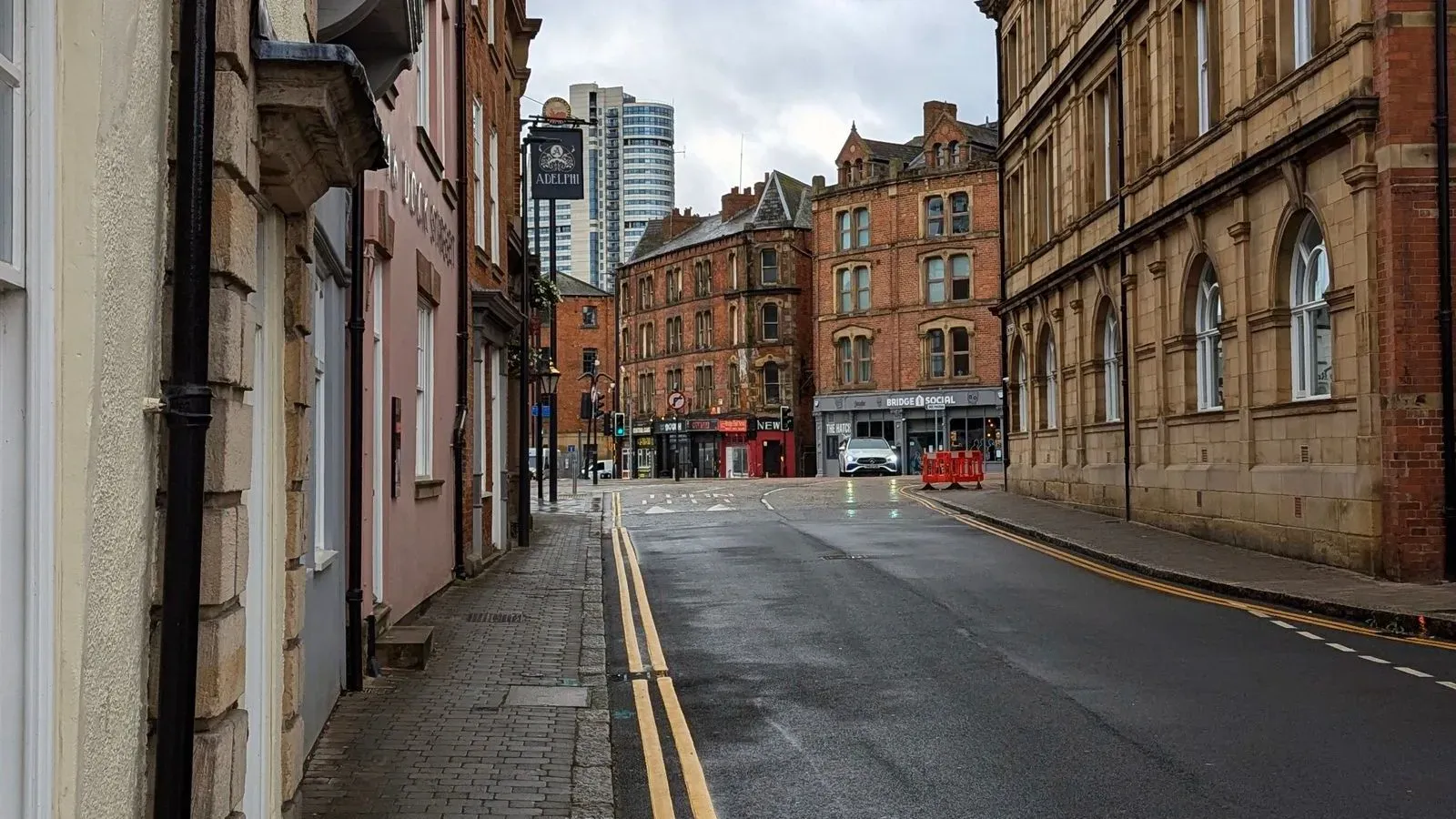
Architecture practice in Leeds with architects on the Architects Registration Board (ARB) register.
On the ARB register · not yet claimed
Leeds

Architecture practice in Leeds with architects on the Architects Registration Board (ARB) register.
Architecture practice in Leeds with architects on the Architects Registration Board (ARB) register.
Architecture practice in Leeds with architects on the Architects Registration Board (ARB) register.
Architecture practice in Leeds with architects on the Architects Registration Board (ARB) register.
Architecture practice in Leeds with architects on the Architects Registration Board (ARB) register.
Architecture practice in Leeds with architects on the Architects Registration Board (ARB) register.
Architecture practice in Leeds with architects on the Architects Registration Board (ARB) register.
Architecture practice in Leeds with architects on the Architects Registration Board (ARB) register.
Architecture practice in Leeds with architects on the Architects Registration Board (ARB) register.
Planning decisions are made by Leeds City Council.
Checked against the linked sources on 14 October 2026 · Leeds City Council area, England; figures to June 2026, council pages read 14 October 2026
MHCLG's district statistics show Leeds City Council deciding 1,960 householder applications in the four quarters to 30 June 2026, with 83.2% granted (MHCLG planning statistics). Householder means work to an existing house: extensions, lofts, porches, garages and outbuildings. Our own sum from the published counts puts 95.0% of those decisions inside eight weeks or an agreed extension.
The remaining 16.8% of decisions were not grants. Read the number as a prompt to look hard at the design before submission, particularly the points the council's own guide stresses: neighbours' light, outlook and privacy, and the look of the street.
| Measure | Figure | Period |
|---|---|---|
| Householder decisions | 1,960 | Year to 30 June 2026 |
| Granted | 83.2% | Year to 30 June 2026 |
| Decided in 8 weeks or agreed time (our calculation) | 95.0% | Year to 30 June 2026 |
| Average house price | £247,695 | July 2026 |
| Council Tax homes built 1945 to 1972 | 28.1% | 31 March 2026 |
| Population | 840,550 | Mid-2025 |
The Valuation Office Agency puts 17.0% of Council Tax homes in Leeds before 1919, 18.6% between 1919 and 1939, 28.1% between 1945 and 1972, 15.9% between 1973 and 1999 and 19.4% from 2000 onwards, with 1.0% unrecorded (VOA, 31 March 2026). Flats and maisonettes are counted too, so the bands describe homes rather than houses alone.
The council says there are 80 conservation areas in the district and that 55 have appraisals and management plans. They range from city-centre areas such as Leeds City Centre and Holbeck to suburbs such as Headingley, Chapel Allerton, Roundhay, Burley Village and Horsforth, and from market towns such as Otley and Wetherby to small villages. The page carries a district map and an individual map for each area (Leeds City Council conservation areas).
On minor works the council's wording is direct: permitted development rights are restricted, and planning permission is required for small extensions, roof extensions including dormer windows, cladding or rendering and some solar panels. Trees get extra protection too. If your street is on the map, a planning application is the safe assumption, and the appraisal will tell you what the council values about the area. Our page on listed buildings covers the separate regime for individual listings; the council reports over 3,300 in Leeds (listed buildings page).
| What | Figure | Source |
|---|---|---|
| Householder decisions, Leeds | 1,960 householder decisions | MHCLG, Live tables on planning application statistics: PS2, last four quarters to 30 June 20261 July 2025 to 30 June 2026 (four quarters); published 24 September 2026 |
| Share of householder decisions granted | 83.2% | MHCLG, Live tables on planning application statistics: PS2, last four quarters to 30 June 20261 July 2025 to 30 June 2026; calculated from published counts |
| Decided within 8 weeks or an agreed extension | 95.0% of householder decisions | MHCLG, Live tables on planning application statistics: PS2, last four quarters to 30 June 20261 July 2025 to 30 June 2026; our own calculation from PS2 counts, not a headline MHCLG measure |
| Average house price | £247,695 | HM Land Registry / ONS, UK House Price Index data downloads July 2026, average price (not seasonally adjusted)July 2026; published 16 September 2026 |
| Council Tax homes built before 1919 | 17.0% of the stock | Valuation Office Agency, Council Tax: stock of properties 2026, Table CTSOP4.031 March 2026; published 24 September 2026 |
| Council Tax homes built 1945 to 1972 | 28.1% of the stock | Valuation Office Agency, Council Tax: stock of properties 2026, Table CTSOP4.031 March 2026; published 24 September 2026 |
| Population | 840,550 people | ONS, Estimates of the population for England and Wales, Table MYE2Mid-2025 (2023 local authority boundaries); released 29 July 2026 |
| Conservation areas in the Leeds district | 80, of which 55 have appraisals and management plans | Leeds City Council, Conservation areasCouncil page read 14 October 2026 |
| Pre-application advice for a house extension | £156 including VAT; target reply 20 working days | Leeds City Council, Pre-application enquiry serviceCouncil page read 14 October 2026 |
| HMO Article 4 direction | Covers 14 named areas of the city | Leeds City Council, Houses in multiple occupation Article 4 directionCouncil page read 14 October 2026; in force since 10 February 2012, per the direction PDF linked from that page |
The Article 4 direction the council describes on its planning pages concerns houses in multiple occupation. It covers 14 named areas, among them Headingley, Hyde Park and Woodhouse, Armley, Kirkstall and Horsforth, and means turning a dwelling into an HMO needs planning permission there (HMO Article 4 direction). The signed direction linked from that page says it came into force on 10 February 2012. We saw nothing there about extensions, so ask the planning team whether any direction restricts works to your particular address.
Leeds applies a Householder Design Guide, which the council's list of adopted documents includes (adopted SPDs) and which the planning page says approvals must comply with (applying for planning permission). The PDF is a supplementary planning document dated April 2012 (Householder Design Guide). A few of its rules of thumb are specific enough to design around:
Leeds charges for pre-application advice. A house extension, outbuilding or alteration within the garden is £156 including VAT with a target of 20 working days; the same for a listed house is £216 and 25 working days. The advice covers one option, it is not binding, and the council says its timescales are not guaranteed. Questions about whether work counts as permitted development go through a Lawful Development Certificate instead (pre-application service).
After you apply, the council says a householder application should be decided within eight weeks and can be tracked on its Public Access register. An application missing a required item is returned as invalid, you get 21 days to put it right, and the council quotes a £40 administration charge for householder applications returned before validation (how to apply). Its validation requirements also ask for a bat scoping survey near roosts and flood risk assessments in flood zones 2 and 3.
Check anyone calling themselves an architect against the register kept by the Architects Registration Board (ARB public information). Our guide to finding your local planning authority helps if your address is near the edge of the council area, where a postcode can mislead.
Project-specific pages for the city: Leeds house extensions, Leeds loft conversions and Leeds planning applications.
Leeds City Council granted 83.2% of the 1,960 householder applications it decided between July 2025 and June 2026, according to MHCLG data. That covers every type of householder scheme, so it cannot predict a specific application. Neighbour impact, street character and heritage constraints decide individual cases.
Yes. The council's page lists £156 including VAT for house extensions, outbuildings and alterations within the garden, with a target reply of 20 working days. Advice covers a single option and does not bind the council later. Questions about permitted development are handled through a Lawful Development Certificate instead.
Leeds City Council says there are 80 conservation areas in the district and that 55 of them have appraisals and management plans. The council publishes a district map and a map for each area. Permitted development rights are restricted inside them, so check your address before assuming work needs no application.
Yes, the council has a Householder Design Guide among its adopted supplementary planning documents. The PDF is dated April 2012 and gives rules of thumb on projections, side gaps, dormers and parking. It is dated, so confirm with the planning team which current policies apply alongside it.
The council says a householder application should receive a decision within eight weeks. MHCLG data analysed by us shows 95.0% of Leeds householder decisions in the year to June 2026 were made within eight weeks or an agreed extension. An application missing documents is returned and the clock does not start.
Rules and fees change, so check the linked page before you rely on a figure. Most planning and building rules here are for England; Wales, Scotland and Northern Ireland differ. This page is general information, not professional advice. Hero photo: Photographer: Tejas kamble. Photo page on Pexels (Pexels licence (free to use), as shown on the photo page on 14 October 2026. Location given as Leeds, England, United Kingdom.).